CIANFRUSAGLIE [Knick-knaks]. The educational method of Rosa and Carolina Agazzi
Fondazione Caritro, Trento, via Garibaldi entrance
October 4 – 25, 2025
Tuesday – Saturday, from 4:00 PM to 7:00 PM
Free admission
Three years after the publication of the monograph “Cianfrusaglie. L’Asilo San Martino di Trento e il metodo delle sorelle Agazzi,” Ente San Martino di Trento presented the project at the exhibition venue of the Fondazione Caritro in Trento.
“CIANFRUSAGLIE. The educational method of Rosa and Carolina Agazzi”
Unique of its kind, the exhibition has made visible to the public for the first time a substantial part of the collection of over 2,700 original objects that comprise the “Museum of Junk,” an innovative tool created by Italian pedagogues Rosa and Carolina Agazzi at the end of the 19th century.
A precious historical testimony of an educational journey that in the city of Trento helped shape generations of children, the ‘Museum of Junk’ of the San Martino Nursery has been fortunate to be preserved by the San Martino Organization—which founded the nursery on October 11, 1899—even after the adoption of more recent teaching and pedagogical methodologies.
Throughout the 20th century, the ‘Museum of Junk’ was used essentially in all kindergartens across Trentino, in Italian-speaking kindergartens in South Tyrol, in Friuli Venezia Giulia, and in Lombardy, where Rosa’s insight led to its creation in 1896: most visitors to the exhibition will have the opportunity to reflect on their own ‘badge’ embroidered on their apron or attached to the coat rack.
The exhibition held in Trento highlighted the richness of ideas and the semantic complexity of a method that, anticipating the most advanced structuralist theories and Jean Piaget’s pedagogical experiences, revolutionized educational practices at the end of the 19th century.
Useful Information
Website: museodellecianfrusaglie.it/en
Facebook: ilmuseodellecianfrusaglie
Instagram: ilmuseodellecianfrusaglie
Coordination
Civic Number
Cultural Association
Stefano Giovanazzi – Francesca Cristellotti
329 4828149 – 344 1702720
Ente San Martino
Morena Quardi
Stefano Arienti
Ricalco
Fondazione Caritro, Trento, via Garibaldi entrance
October 4 – 25, 2025
Tuesday – Saturday, from 4:00 PM to 7:00 PM
Free admission
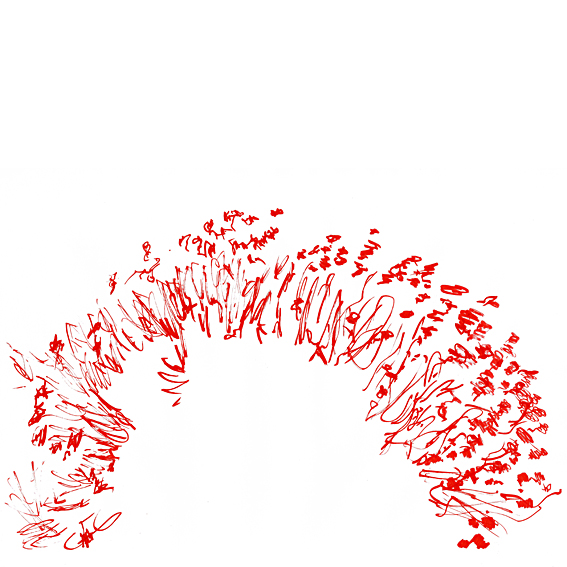
On the occasion of the opening of the exhibition “Cianfrusaglie. The Educational Method of Rosa and Carolina Agazzi,” the installation was inaugurated.
Stefano Arienti “Ricalco”
A series of large-scale works that the artist dedicated to the two important Italian educators.
The Project
Using simple manipulation techniques learned since childhood and activating sometimes repetitive linear processes, Stefano Arienti transforms common objects, often everyday items—such as phone books, comics, train schedules, sheets of paper, posters, and billboards—into sculptures. These works, while preserving the fragility and transience of the materials used, reveal the artist’s interest in the communicative potential inherent in images from popular culture. The most widespread and recognizable images thus become inspiration for personal reinterpretation. Through simple gestures like folding the pages of a book, erasing parts of a poster, retracing outlines while retaining only some points, or perforating lines in a drawing, the artist alters the immediate recognizability of the icon. This creates a perceptual disorientation in the viewer, reducing the communicative power of the original image. The process by which Stefano Arienti creates his works, and the simplicity of their execution, are closely tied to the way the piece has been conceived and envisioned: he has always been interested in process art, particularly in the work of artists like Alighiero Boetti, or designer-planners like Gio Ponti. The artist approaches with irony the confrontation with the more radical experiences of the 20th century, such as Futurism, Conceptual Art, Arte Povera, and Minimalism.
Keep reading
Stefano Arienti was born in 1961 in Asola, in the Mantovano region, into a family of peasant origins. He spent his childhood in an old farmhouse in the Po Valley countryside. As a young boy, he developed an interest in scientific studies, and in the late 1970s, he moved to Milan to attend the Faculty of Agricultural Sciences, where he graduated in 1986. During his studies, he met some young artists of the Milanese avant-garde, including Corrado Levi, who would become his first mentor. He made his artistic debut without any formal academic training: his creativity was sparked by reflections that ranged from biology to art history, from an attraction to Eastern culture to a love for nature, along with a passion for collecting, which he developed from childhood.
In 1985, he participated in his first group exhibition with “Muffe,” intervening with colored chalks on the cracked and damp walls of the former electric motor factory Brown Boveri in the Isola district of Milan. From the outset, it is evident that a constant in the artist’s methodology will be: intervening on existing images, objects, or surfaces to give them a new appearance and meaning. Subsequently, he exhibited in Ferrara and Milan; in 1986, he held his first solo show at Corrado Levi’s Studio, and in 1989, he organized an exhibition at Studio Guenzani. There, he presented to the public the series “Alghe” (Algae), long and light strips of colored plastic hanging from above, and “Turbine,” sculptures made from folding magazine pages and industrial paper volumes. In both cases, the processual aspect of creating the work—as well as the choice of materials, derived from everyday reality—is central. Boetti and Munari, Tony Cragg and Carla Accardi, Pino Pascali and Piero Gilardi are the artists who have exerted a significant influence on the young Arienti. In 1990, he was invited to participate in the “Aperto” section of the 44th Venice Biennale, and from 1991 he exhibited at the Luigi Pecci Center for Contemporary Art in Prato.
In the mid-1990s, the artist’s international recognition was confirmed by his participation in exhibitions held in prestigious venues such as the Reina Sofia Museum in Madrid. In the same period, Arienti began experimenting with works focused on the relationship with space and society, such as the Murazzi dalla cima, an intervention on a heavily frequented stretch along the Po River in the center of Turin.
In 1997, his works appeared in prestigious group exhibitions such as “Pittura Italiana” at the Castello di Rivoli and “Fatto in Italia” at the Centre d’Art Contemporain in Geneva. Additionally, a monograph dedicated to the artist was published by the Sandretto Re Rebaudengo Foundation.
In 2004, in Rome, the MAXXI, the Museum of 21st Century Arts, in collaboration with the Sandretto Re Rebaudengo Foundation, dedicated its first major public solo exhibition to him. The same year, Arienti became an artist in residence at the Isabella Stewart Gardner Museum in Boston, a prestigious institution whose collections of decorative arts and Asian art provided new inspiration. In 2007, he was offered another important artistic residency at Artpace in San Antonio, Texas. During this period, he created works using perforation techniques, employing a mini drill, on various materials mostly drawn from everyday life, such as car doors and vinyl records, Macramè, which features delicate lace effects on unusual supports like onyx or marble, and Torn Books. In recent years, the artist has also engaged with large installations of strong impact, such as the one titled Enciclopedia, created in 2009 with books and felted wool at the Santo Spirito in Sassia Complex in Rome. At the end of 2009, many of his works were exhibited in a solo show held at the Palazzo Ducale in Mantua. Stefano Arienti has taught at the Accademia di Belle Arti in Bergamo and since 2003 has been a faculty member in the Design and Arts department at IUAV University of Venice.
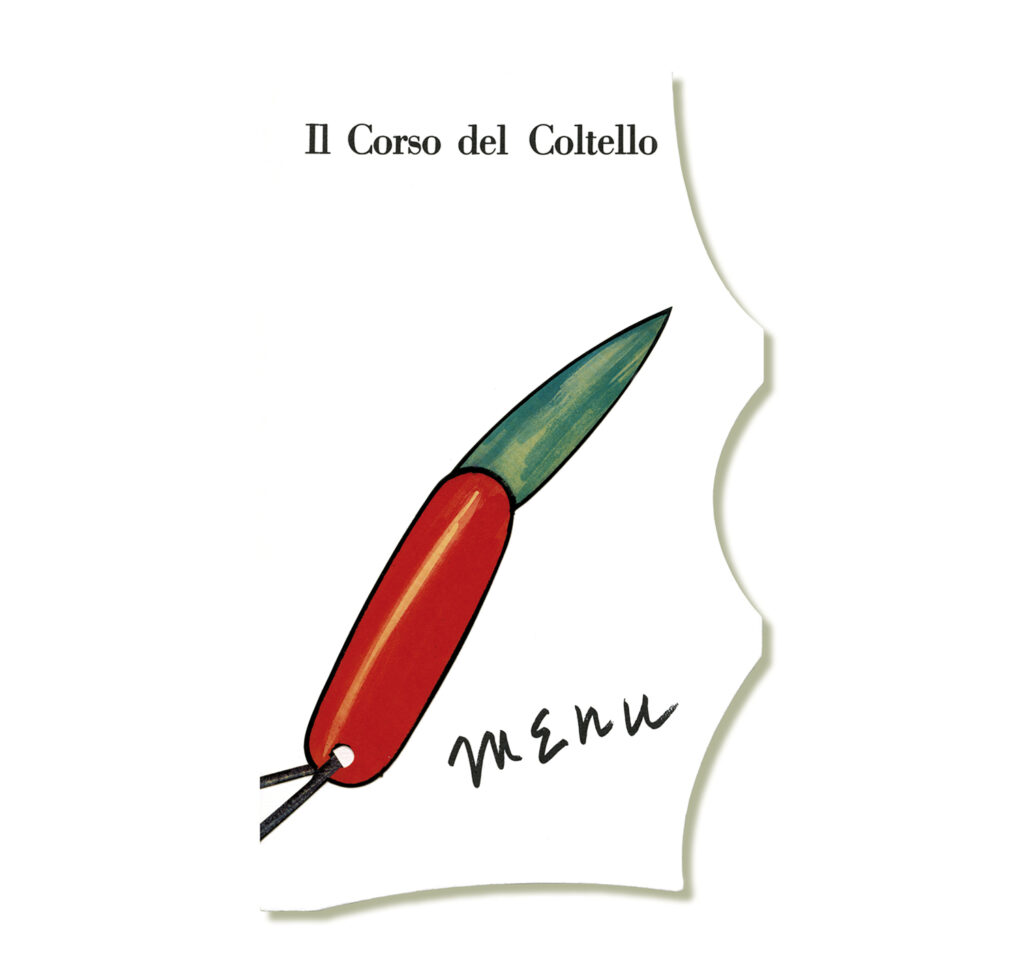
Thinking Books
Artist’s Books and Illustrated Children’s Books
Original documents from AAC Contemporary Art Archive Rovereto curated by Stefano Giovanazzi
Fondazione Caritro, Trento, entrance via Garibaldi
October 4 – 25, 2025
Tuesday – Saturday, from 4:00 PM to 7:00 PM
Free admission
Project
In the vast creative, graphic, and artistic production of illustrated children’s publications and artist’s books, Stefano Giovanazzi has selected from the materials that make up the Contemporary Art Archive (AAC) of Rovereto some documents that are particularly significant in relation to the thoughts of Rosa and Carolina Agazzi.
The Index Book by Andy Warhol, containing numerous pop-ups, the cut-out books by Stefano Arienti, the mini-catalog Expertise Express by Giancarlo Norese, Rébecca Dautremer’s Little Theater, as well as the experiences of impossible alphabets by Michael Snow, or the most radical objects by Peter Brötzmann, along with works by Munari, Lodi, and Enzo Mari, up to artist’s boxes elaborated by Dennis Oppenheim, Giulio Paolini, Pippilotti Rist, among others, offer the opportunity to explore techniques, practices, materials, and languages—all zones of flow between imagination and reality.
Keep reading
AAC Archivio Arte Contemporanea
The materials from the exhibition come from Archivio Arte Contemporanea, a repository of objects and ideas that condenses some of the most expressive experiences of contemporary thought. Founded by Stefano Giovanazzi in 1980, over the years the archive has collected and preserved 180,000 documents—works of art, artist books, monographs and periodicals, sound recordings, videos, ephemera, posters, and photographs—testimonies of encounters with the protagonists of contemporary art and some of the most important figures in contemporary philosophical and literary reflection. From its beginnings in Venice, acquisitions have accelerated over time. Today, the archive promotes the most innovative experiences in contemporary art through loans and by curating projects in collaboration with academies, museums, foundations, and other institutions. The research for documents mainly focuses on ‘movements’: Futurism, Dadaism, Informal Art, Neodada, Pop Art, Optical Art and Kinetic Art, Conceptual and Minimal Art, Arte Povera, Transavantgarda, Nuovi Nuovi; Situationism and the Student Movement (‘68, ’77), Utopianism and Science Fiction, Feminism.
Children’s Exhibitions
Original Creations from Cianfrusaglie Workshops
Exhibition of the ceramics created by children during the ‘Ceramic Sculpture’ Workshop, drawings and comics made by children during the ‘Visual Storytelling’ Workshop, illustrations produced by children during the ‘Illustration’ Workshop, and activities carried out by children during the ‘Theater’ Workshop.
Fondazione Caritro, Trento, via Garibaldi entrance
October 4 – 25, 2025
Tuesday – Saturday, from 4:00 PM to 7:00 PM
Free admission
The Project. On the occasion of the first exhibition of the original documents that make up the “Museum of Junk of the San Martino Nursery School” in Trento, a special event was organized to dedicate to the children who attended the five scheduled workshops: the objects created, just a few days after their completion, were displayed within the exhibition path.
Showing the crafts produced by the children during the creative workshops is essential for several reasons. First of all, as has been noted, this process helps children develop awareness of their own abilities. Seeing the tangible result of their effort and creativity reinforces self-confidence and fosters a sense of achievement.
Secondly, displaying their work promotes self-assessment and reflection. Children learn to evaluate their behavior, recognize their strengths and areas for improvement, thus developing critical and analytical skills. This reflection process is crucial for their cognitive and social development.


